Guide
Influencer Selection
Brands
Fake and low-quality profiles are identified by patterns, not single numbers: engagement that does not scale with follower count, generic interchangeable comments, sudden follower spikes, audience geography that does not match the content language, and stories that get far less traction than the grid. One signal proves nothing; three together should stop the deal.
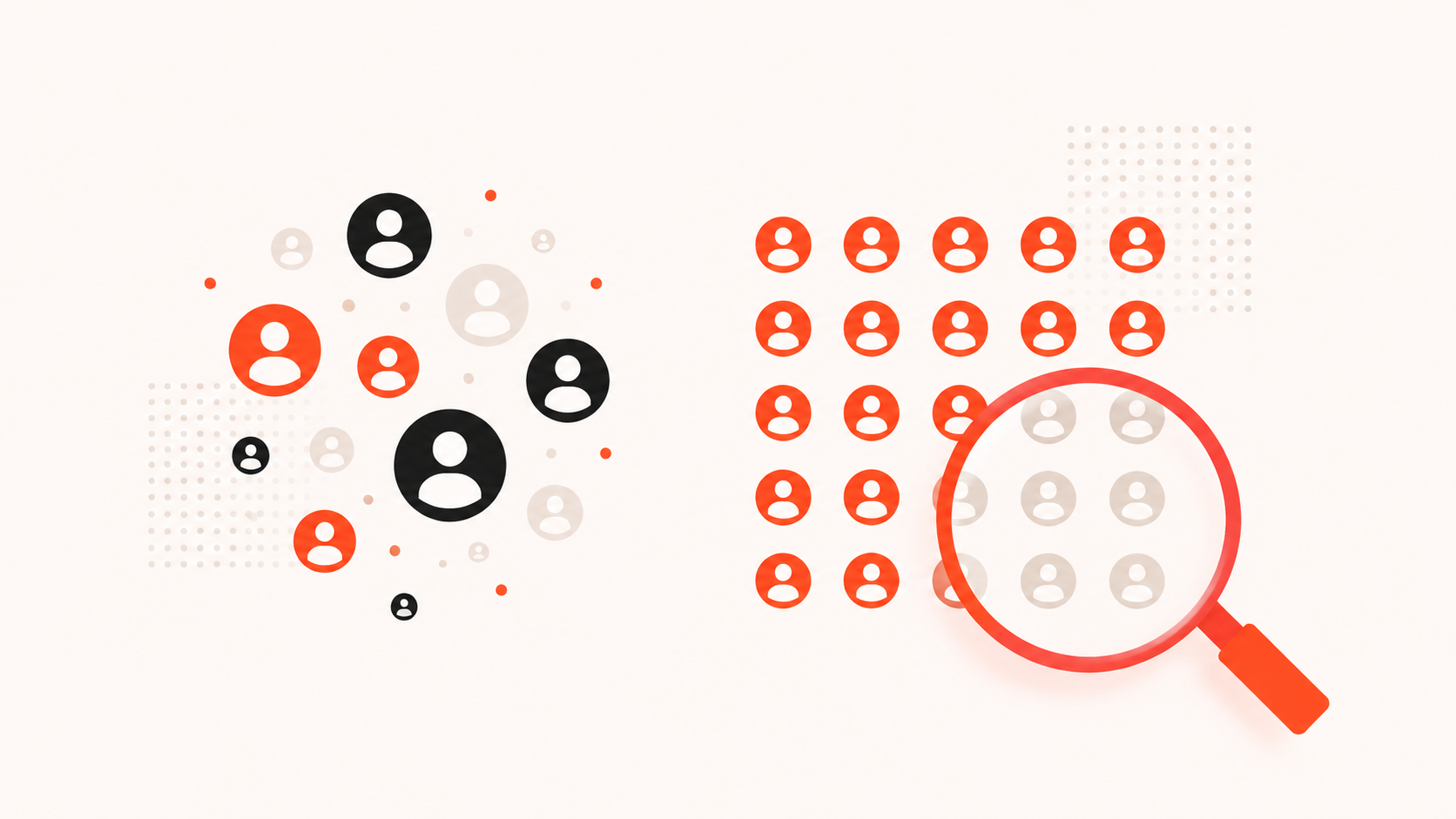
Paying for an audience that does not exist is the most direct way to waste an influencer budget. It is also avoidable in about ten minutes per profile.
Worth being precise about the problem, though. There are three different issues and they need different responses:
Only the first is misconduct. All three cost you money. A fourth, related pattern — engagement pods — looks different again: the followers are entirely real, but part of the engagement on individual posts is coordinated rather than organic, so none of the checks below will catch it on their own.
Engagement rate naturally falls as accounts grow, but the fall is gradual. An account with 100k followers averaging the same absolute engagement as one with 8k is worth a closer look. Baseline engagement also differs by tier — see nano, micro, macro or mega influencers for how nano, micro, macro and mega compare — so judge a profile against similar-sized peers, not a single number. For the exact formula and what a reasonable range actually looks like, see influencer engagement rate: how to calculate it.
Check consistency too. Genuine accounts vary post to post. Suspiciously flat engagement across every post suggests it is being topped up to a target.
This is the fastest check available. Open the comments on three recent posts.
Real comments reference the specific content — the outfit, the recipe, the situation, an inside joke. Purchased comments are interchangeable: "amazing", "love this", "so beautiful", strings of emoji, arriving in a burst shortly after posting.
If you could paste the comment section onto a different creator's post and notice nothing, that is your answer.
Organic growth is uneven but continuous, with occasional jumps when something performs well. Bought growth looks like a step — flat, vertical, flat. Any third-party analytics tool will show the curve; a vertical section with no corresponding viral post is a strong signal.
A creator posting exclusively in Danish with an audience concentrated in regions with no Danish speakers is not reaching a real audience. This pattern is very common with purchased followers, which are frequently sourced in bulk from a small number of countries.
Story views are much harder to inflate than likes. If a creator has 50k followers and consistently gets a few hundred story views, the follower number is not describing an engaged audience.
Ask for story view screenshots. Reluctance to share them is informative in itself.
Weaker signals, but useful in combination. Accounts following tens of thousands are usually built on follow-back loops. A large following on a very young account with little content deserves scrutiny.
Any one flag: proceed with mild caution. Three or more: walk away, however good the content looks.
Detection is useful, but structure protects you better than vigilance does.
In Make Influence, creator profiles carry audience data and past campaign performance, and each collaboration is tracked at creator level — so a profile that looks impressive but produces no clicks becomes visible in the numbers rather than in hindsight. Over a few campaigns that history does most of the vetting work for you.
Ambiguous cases are common and not always disqualifying. A reasonable middle path is a small first collaboration weighted toward performance-based compensation. If the audience is real, everyone does well. If it is not, the cost of finding out is small.
Related reading: how to choose the right influencers, how to check an influencer's audience before you pay, and how to track performance.
No. Accounts attract bot followers passively, and some creators inherited inflation from old growth services. Intent matters less than whether the reachable audience is real.
No. Large accounts and some niches naturally sit lower. Judge it relative to comparable creators, not against a universal benchmark.
They are a good filter but produce false positives and negatives. Combine tool output with reading the comments and looking at actual results.
No. Meta Verified only confirms the identity behind a profile — it says nothing about whether the followers are real or purchased. Run the checks in this article regardless of whether a profile carries the badge. See does Meta Verified actually change brand deals for influencers? for what the badge does and doesn't prove.
Make Influence
Find creators with real audience data, run collaborations in one place, and see clicks and sales per creator while the campaign is live.
Book a demoCreate accountMake Influence
Apply to campaigns from brands that are actively looking, follow your own clicks and sales, and get paid without chasing invoices.
Create creator profileMore creator guidesMake Influence
Briefs, agreed terms, tracking links and results sit together — so brands and creators see the same numbers.
See how it worksBrowse the Academy